
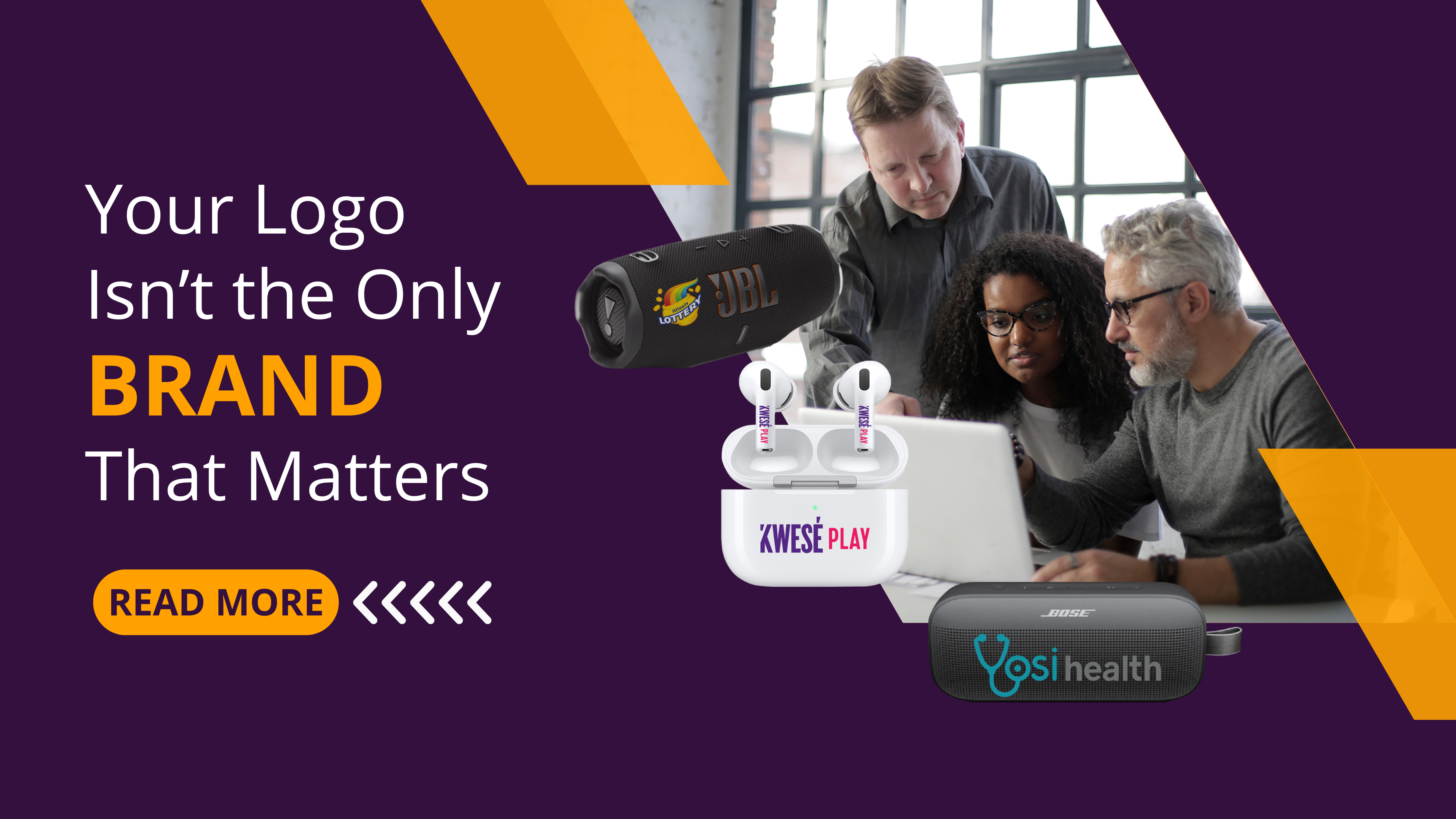
There was a time when putting a company logo on almost anything was considered good promotional marketing.
Today, the bar is higher.
Recipients have become more selective about what they keep, use, and bring into their everyday lives. And increasingly, the brand of the product itself matters.
That doesn't mean your logo matters less.
It means the product carrying it matters more.
Recognition Changes Perception
There is an immediate difference between receiving an unfamiliar promotional product and receiving something from a brand you already recognize.
A name like Apple, Bose, JBL or Beats carries its own expectations—design, quality, lifestyle and familiarity.
That recognition can give a promotional gift a head start.
Recent PPAI research reflects the broader shift: consumers increasingly see branded merchandise as an extension of a brand's identity, with design, relevance and emotional connection influencing whether a product feels meaningful or forgettable.
And retail-branded merchandise is growing for a reason. PPAI reports that retail-branded merchandise reached approximately $6 billion in 2025, significantly outpacing the broader distributor market.
The Power of Co-Branding
The most interesting opportunity isn't replacing your brand with another brand.
It's putting the two together.
Your company's logo becomes part of an already recognizable product—creating a partnership between the brand they know and the brand you're building.
Think about the difference between handing someone a generic pair of earbuds and presenting them with a branded pair of Beats.
The second immediately communicates something different.
It feels considered.
It feels familiar.
And it can feel like a gift rather than merchandise.
Premium Doesn't Always Mean More
A higher price tag alone doesn't make a promotional product premium.
Perception does.
Design, recognition, functionality and the experience of receiving the product all contribute to perceived value.
That is why recognizable retail brands are increasingly finding their place in employee recognition, executive gifting, customer appreciation, incentives and holiday campaigns. Recent industry guidance around holiday gifting similarly points to well-known brands and strong perceived value as ways to make gifts more impactful.
The Logo Gets Seen. The Product Gets Remembered.
That's the real opportunity.
Your logo creates the brand connection.
The product creates the reason to keep it.
When those two things work together, promotional marketing becomes more than visibility. It becomes an experience associated with quality, relevance and appreciation.
So when planning your next campaign, don't only ask:
“What can we put our logo on?”
Ask:
“What brand would make our logo look even better?”
Because sometimes the smartest way to elevate your brand is to let a great brand share the spotlight.
